Finding a horse can appear simple: watch a few videos, compare competition results and arrange a trial. In reality, a horse can be talented, impressive and correctly priced—and still be completely wrong for a particular rider.
The right match depends on much more than jumping ability or pedigree. Temperament, experience, rideability, management requirements, rider confidence and long-term ambitions all matter.
That is why Hiplando’s horse-scouting service begins with the rider, not the listings.
The Right Horse Starts With the Right Brief
Before beginning the search, we create a clear profile of both the rider and the horse required. Important details include:
Discipline and current competition level
Goals for the next one to three years
Preferred age, height and experience
Desired temperament and sensitivity
Rider experience and confidence
Purchase budget
Budget for veterinary checks and transport
Preferred location and willingness to travel
Essential requirements and genuine deal-breakers
A precise brief does not unnecessarily limit the search. It removes unsuitable options and allows everyone involved to focus on horses with real potential.
If the expectations, budget and available market do not align, it is better to discuss that at the beginning than after weeks of searching.
How the Hiplando Scouting Process Works
1. Understanding the Rider
A horse should suit the rider who will actually train, compete and care for it.
Hiplando considers the rider’s experience, physical build, preferred type of ride, current challenges and future ambitions. When possible, recent riding videos can provide valuable additional context.
For example, a sensitive young horse with exceptional potential may suit a professional rider, while an ambitious amateur may benefit more from an experienced horse that provides confidence and forgives mistakes.
Neither horse is necessarily better. They are simply suited to different riders.
2. Searching the International Market
Once the brief is clear, Hiplando searches through its international equestrian network. This can include:
Horses listed publicly for sale
Partner stables, breeders and professional riders
Private owners
Dealers and trusted industry contacts
Suitable off-market opportunities when available
Our objective is not to send the largest possible number of horses. It is to identify a smaller, more relevant selection that deserves serious consideration.
3. Screening Potential Horses
Before recommending a horse, the available information should be reviewed carefully.
Depending on the horse and situation, this may include:
Confirming the horse’s identity, age and location
Reviewing pedigree and competition history
Requesting recent, representative videos
Comparing the horse’s experience with the buyer’s goals
Asking about temperament and stable behaviour
Discussing known veterinary history or maintenance
Confirming the asking price
Checking that the person advertising the horse has permission to do so
Videos are useful for preliminary screening, but they are not a substitute for seeing and trying the horse. A polished competition round shows only one moment. Recent footage of flatwork, transitions, both reins and normal daily riding can often provide a more complete first impression.
4. Creating a Serious Shortlist
A good shortlist should make the decision clearer, not more confusing.
For each suitable candidate, the buyer should understand why the horse may fit, what questions remain and whether there are any obvious compromises. These could involve age, experience, sensitivity, maintenance, location or price.
Every horse involves trade-offs. The purpose of professional scouting is to make those trade-offs visible before time and money are invested in trials.
5. Arranging and Evaluating Trials
When a horse passes the initial screening, Hiplando can help coordinate the trial.
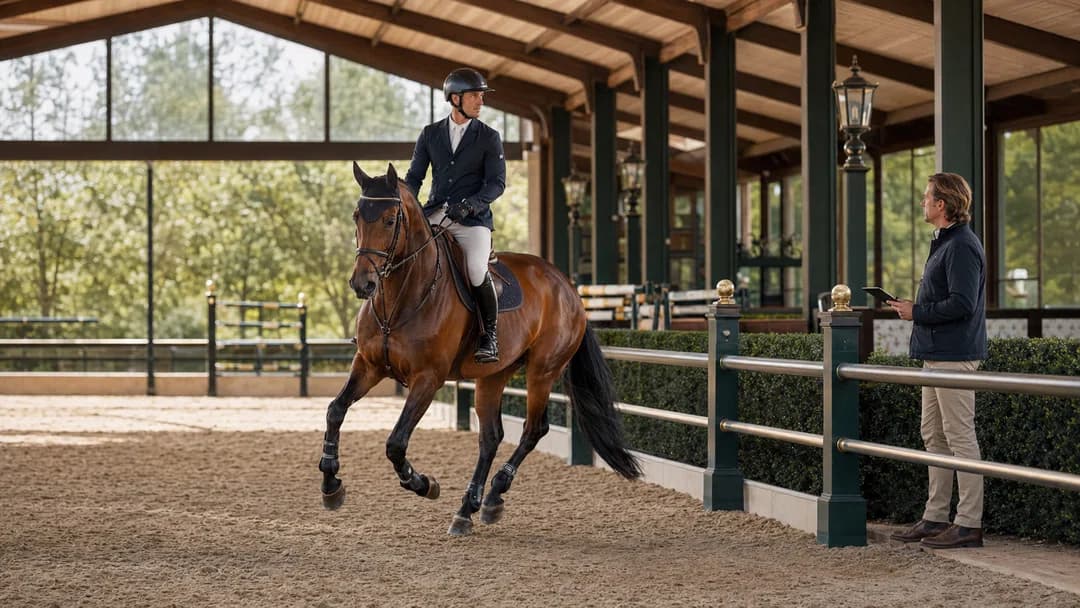
A useful trial should allow the buyer to assess more than one impressive jump. The rider should experience the horse’s normal way of going and, where appropriate, see it ridden by its regular rider first.
The trial may include:
Basic flatwork and transitions
Riding on both reins
Poles or jumping appropriate to the buyer’s level
Observing the horse before and after riding
Discussing its normal training and management routine
Asking consistent questions about behaviour, soundness and history
The rider’s trainer or another trusted professional should be involved whenever possible. Video footage of the trial can also help the team review the experience afterwards without relying only on first impressions.
Performance Is Only Part of the Match
Competition results and pedigree can help demonstrate a horse’s experience or potential, but they do not tell the complete story.
A successful match must also consider questions such as:
Does the horse respond comfortably to the rider’s aids?
Does the rider feel confident and secure?
Is the horse’s energy level suitable?
How much professional training will be required?
Does its management fit the buyer’s facilities and routine?
Is the horse appropriate for the intended level—not only today, but in the future?
The most impressive horse on paper is not always the horse that will produce the best partnership.
The Pre-Purchase Veterinary Examination
Once a buyer is seriously interested, an independent pre-purchase veterinary examination is strongly recommended.
The buyer should appoint a qualified veterinarian and agree on an examination appropriate to the horse’s age, value, discipline and intended use. The scope may include a clinical examination, flexion tests, blood sampling and diagnostic imaging where appropriate.
A veterinary examination is not simply a pass-or-fail test. Findings must be interpreted in relation to the horse’s intended purpose and the buyer’s acceptable level of risk. No examination can guarantee a horse’s future health or performance, but it can provide essential information for a more informed decision.
Hiplando can assist with coordination, while the veterinary opinion remains independent.
Agreement, Payment and Transport
When the buyer decides to proceed, the commercial terms should be recorded clearly in writing.
The agreement should identify the horse, buyer and seller and address the purchase price, payment conditions, any included equipment, agreed veterinary conditions, delivery arrangements and other important terms.
For an international purchase, transport and documentation should be planned early. Hiplando can help coordinate suitable transport and the practical steps required to move the horse safely to its new stable.
Common Horse-Buying Mistakes
Even experienced buyers can make costly mistakes when emotion takes over. Common examples include:
Buying based on one impressive video
Prioritising pedigree over suitability
Ignoring the rider’s confidence or ability
Changing the search criteria for every new horse
Rushing because another buyer may be interested
Spending the entire budget on the purchase price
Skipping independent veterinary advice
Failing to confirm important information in writing
A structured process cannot remove every risk, but it can prevent many avoidable ones.
Who Can Benefit From Horse Scouting?
Professional scouting can be valuable for:
Amateur riders looking for a safe and competitive partner
Professionals searching for talented prospects
Trainers sourcing horses for clients
Parents looking for an appropriate horse for a young rider
International buyers navigating an unfamiliar market
Busy buyers who want a more efficient, focused search
The service can be adapted to different disciplines, experience levels and budgets.
Start Your Hiplando Scouting Request
To begin, prepare the following information:
Your discipline and current level
Your competition or training goals
Preferred age, height and experience
Desired temperament
Purchase budget
Current location
Preferred search area
Expected timeline
Any essential requirements or deal-breakers
A recent riding video, when available
You can submit your request through the Hiplando Scouting WhatsApp group, contact Hiplando directly on WhatsApp, or email [email protected].
The right horse should not only impress you during the first trial. It should make sense for the partnership, ambitions and equestrian life you intend to build together.